Quick answer: What is the infield fly rule? It declares the batter out on a catchable pop-up with runners on first and second, or bases loaded, and fewer than two outs. It stops the defense from dropping the ball on purpose.
The rule is one of several baseball regulations that look odd until the mechanics are clear. Fans following October baseball can also read how does the mlb postseason work in the how does the mlb postseason work hub, which collects the main baseball explainers.
The rule at a glance
The infield fly rule applies only in a narrow game situation. Every part of the setup must be present, and the umpire has to judge that an infielder can catch the ball without unusual effort. The table turns each condition into something a viewer can check while the ball is in the air.
| Element | What the rule requires | Planning use |
|---|---|---|
| Runners | Runners on first and second, or the bases loaded | Check the bases first. With first base empty, the rule does not apply. |
| Outs | Fewer than two outs | With two outs, the rule is off, so a dropped pop-up is an ordinary play. |
| The ball | A fly that an infielder can catch with ordinary effort | A deep or wind-blown ball that needs unusual effort falls outside the rule. |
| The result | The batter is out | The out stands whether or not the fielder holds the ball. |
| The call | “Infield Fly, the batter is out,” made once the ball reaches its highest point | Listen for the words and watch for the umpire’s signal. |
These conditions follow the Sunnyvale Little League umpire guide to the rule.
Why the rule exists
The infield fly rule exists to stop a defensive trick. The umpire guide explains that without it, wily infielders could try for an easy double play by letting the ball drop untouched.
The logic rests on the force play. A runner on first is forced to leave the base when the batter hits the ball, because the batter must take first. When a pop-up hangs in the air, though, the runners have a dilemma. If they run and the ball is caught, they can be doubled off. If they stay near their bases and the ball is dropped, the defense can pick up the loose ball and take outs on the forced runners.
The same guide describes the exploit directly: the defense throws for a force out at third base, with the relay catching another runner. The infield fly rule removes that incentive by putting the batter out in advance.
The guide also stresses what the rule is not for. The purpose is not to give the defense a cheap out. It is a protection for the offense in one specific situation.
A short history
The rule is old. It first appeared in baseball rules in 1895, and that year it applied only with one out. In 1901 it was amended to the exact form used today, according to the same guide.
A play with and without the rule
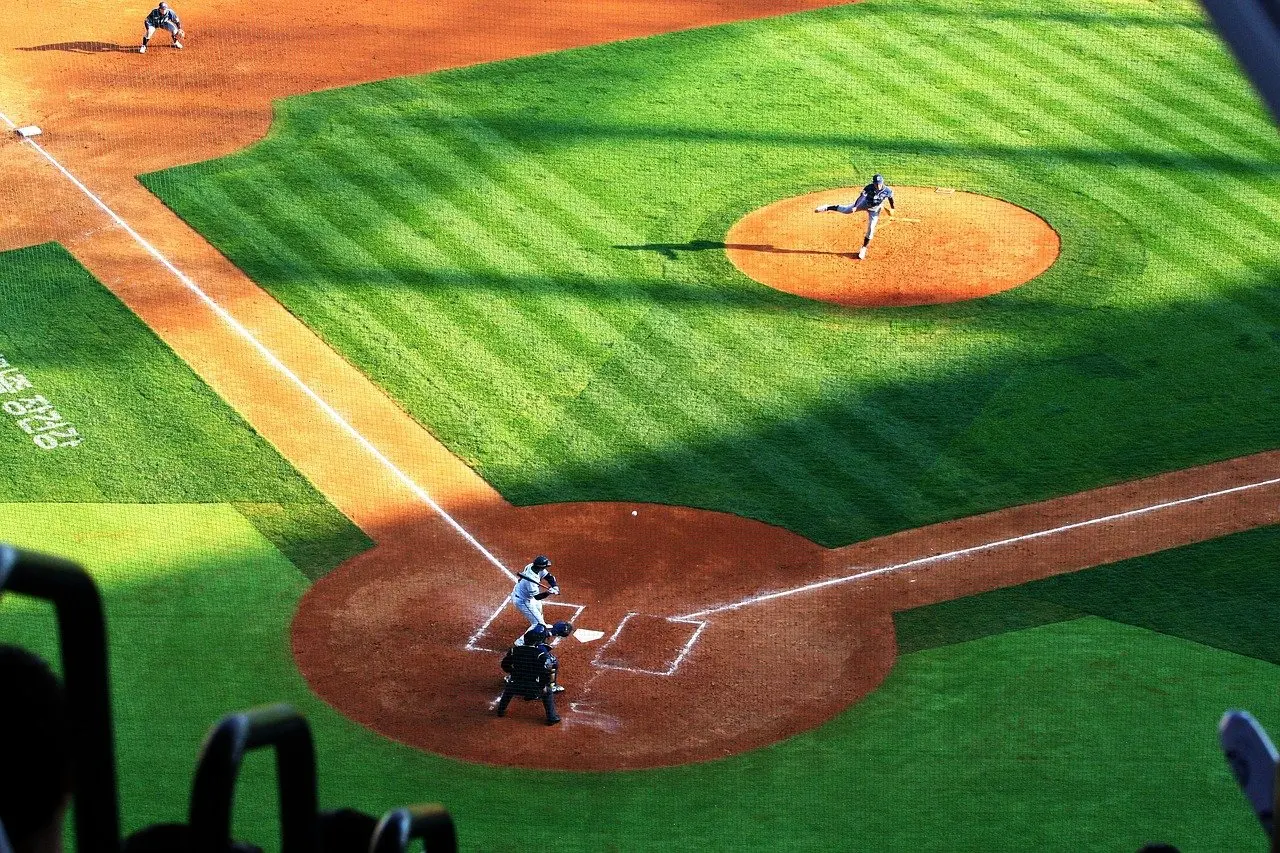
A step-by-step play shows the purpose better than the definition does. Take a game with runners on first and second and fewer than two outs. The batter lifts a soft pop-up over the infield, and an infielder settles underneath it.

Without the rule
- The batter hits the pop-up. The runners hold near their bases, because running risks being doubled off if the ball is caught.
- The infielder lets the ball drop. It lands untouched, and now every runner is forced to advance.
- The defense throws for the force at third. The out at third base is easy because the runner stayed close to the bag.
- The relay catches another runner. That is the easy double play the rule is designed to prevent.
With the rule
- A hitter lifts a fly ball into the same zone. The umpire judges that an infielder can catch it with ordinary effort.
- The umpire makes the call. At the ball’s highest point, the umpire says, “Infield Fly, the batter is out.”
- The batter is out immediately. The out counts whether the fielder catches the ball or lets it fall.
- The defense gains nothing from a drop. A deliberate miss no longer converts into a double play, so the infielder simply makes the catch.
The contrast shows the point of the rule. With it, the defense gets one out for the batter and has no easy path to a second. Without it, the defense could deliberately create a double play from a routine pop-up.
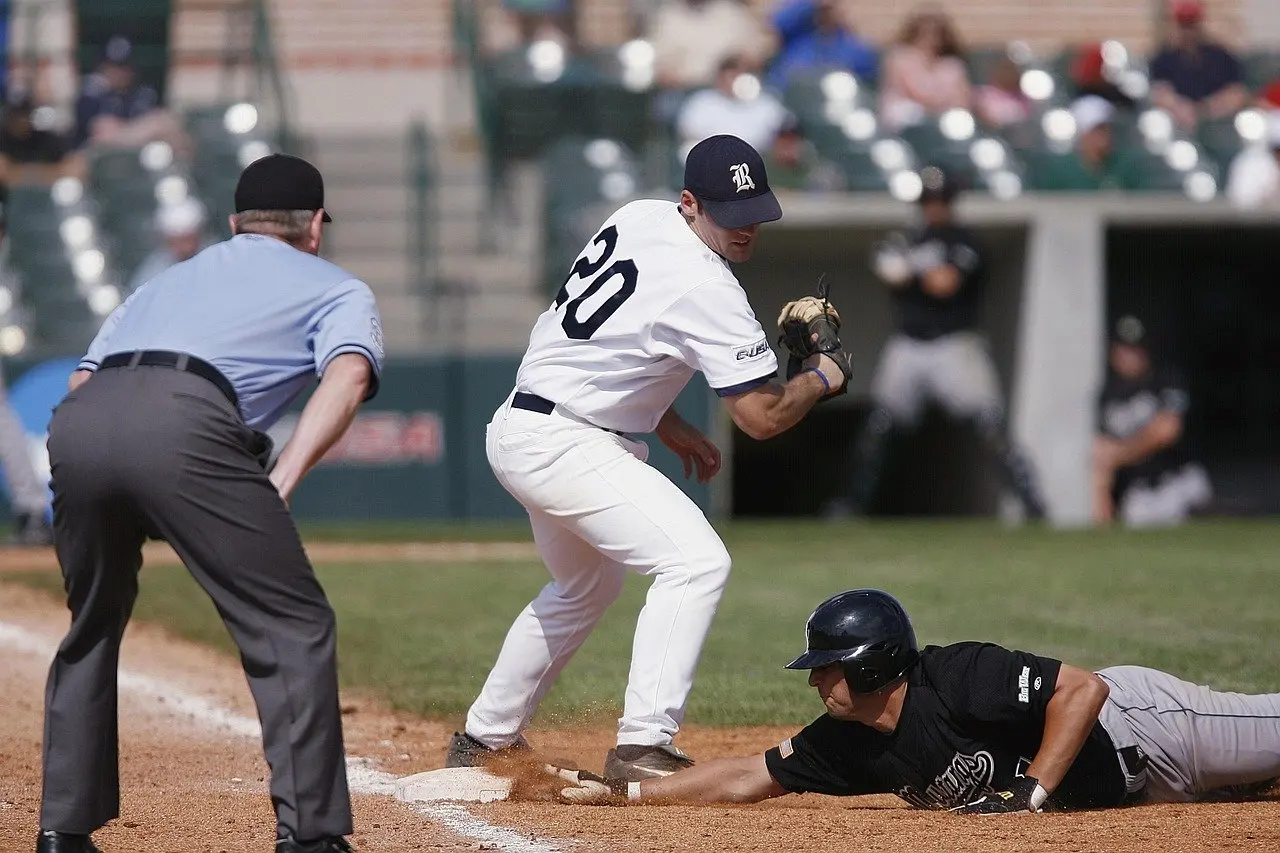
How the umpire makes the call
The umpire makes the infield fly call, and the timing is part of the rule. The umpire guide says to call it when the ball has reached its highest point, using the words “Infield Fly, the batter is out.”
The guide adds that the umpire should not rush to judgment. Its advice is to wait until the umpire is certain the ball can be caught with ordinary effort. An early call on a ball that then drifts away would put a batter out unfairly.
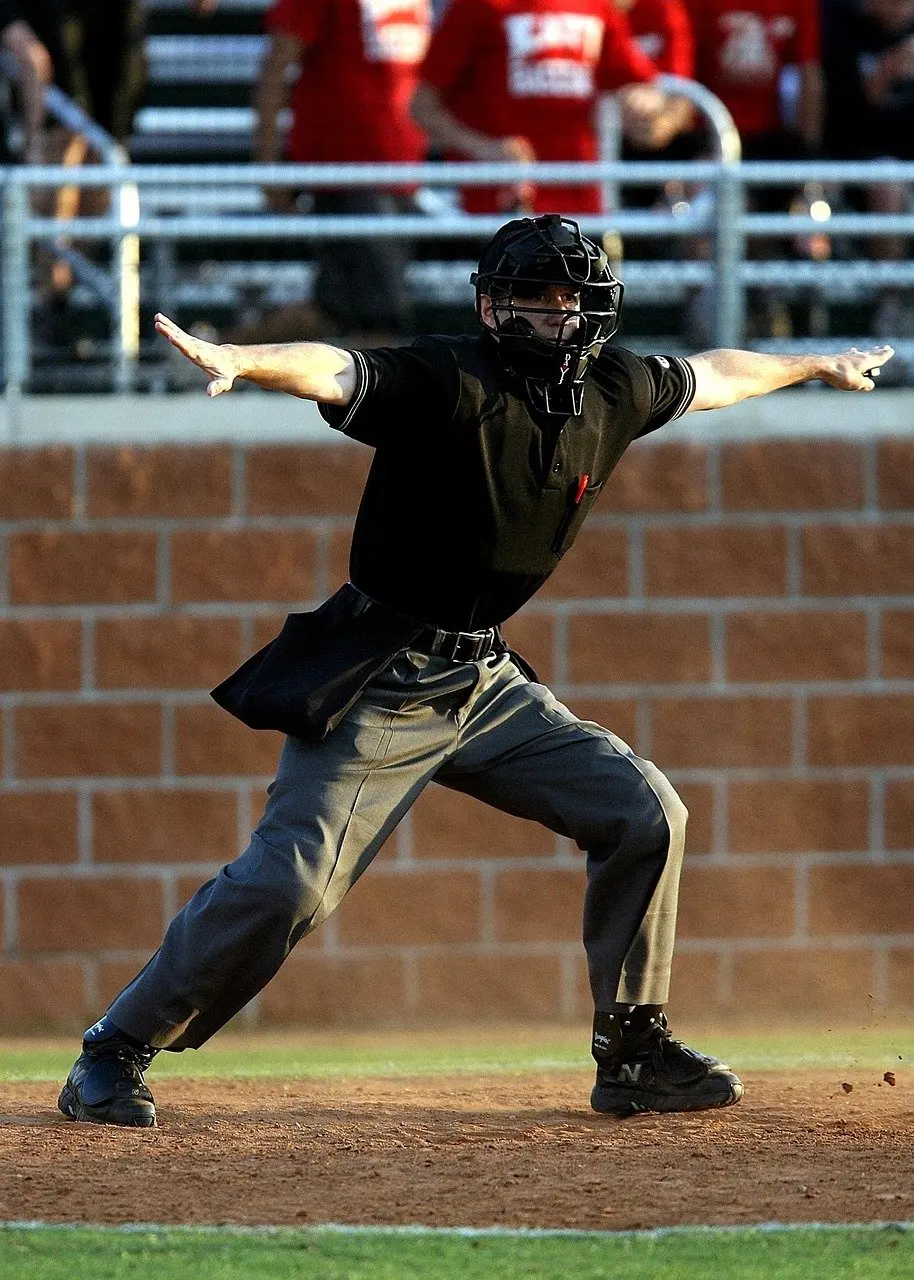
Who can make the call
Any umpire can determine the status of a potential infield fly, per the guide. When one umpire has made the judgment, the partner should echo the call and signal afterward, so players and fans hear and see it clearly.
Ordinary effort and fair territory
Two judgment points decide whether a pop-up counts. The first is ordinary effort: the rule covers a fly that an infielder can catch with ordinary effort, and the batter is out in that case. A ball that takes a sprint, a dive or a long run is not covered.
Weather can change the verdict. The guide notes that on windy days, a ball that starts out as an infield fly might end up deep in the outfield. This is a reason for the umpire to wait for the ball’s path to settle before calling it.
Pop-ups near the foul line
The second point is fair territory. When a high fly drifts near the foul line, the umpire cannot yet know where it will come down. The guide gives the wording for that case: “Infield Fly, the batter is out, if fair.” The out therefore depends on the ball landing in fair territory.

What happens to the runners
The call affects the runners because it removes the defense’s trap. The guide observes that on a pop-up the runners will be hanging around near the bases anyway, which is why a deliberate drop would otherwise be so effective.
With the batter already out, the defense cannot use a drop to set up a force out at third with a relay catching another runner. The runners are protected from that sequence. The call changes the batter’s status at once, rather than waiting to see whether the catch is made.
The force play is still the idea underneath. A force play depends on a runner having to move because the batter becomes a runner, and the infield fly rule takes the sting out of that situation when the ball is hit high and softly.
When the ball is dropped
A dropped ball is exactly the case the rule was written for. Because the batter is out on the call, the drop does not hand the defense an easy extra out. The infielder’s best play is to catch the ball.
Common misreadings
- It is not a rule about every pop-up. It needs the base situation and fewer than two outs. A pop-up with first base open is an ordinary fly ball.
- It does not require the catch. The call puts the batter out, and the umpire does not need to wait for the fielder to hold the ball.
- It is not limited to the shortstop or second baseman. The rule refers to a fly that can be caught by an infielder with ordinary effort, so the judgment is about catchability, not which fielder gets there.
- It is not a gift to the defense. The guide is explicit that the rule’s purpose is not to give the defense a cheap out.
Rules that hinge on umpire judgment are often argued over in the same breath. For another one, what is a balk in baseball explains how a pitcher’s motion is judged.
Frequently asked questions
What is the infield fly rule and when does it apply?
It puts the batter out on a fly ball that an infielder can catch with ordinary effort. It applies with runners on first and second, or the bases loaded, and fewer than two outs.
Why does the rule exist?
It prevents the defense from letting a pop-up drop untouched to turn an easy double play. It was first used in 1895 and reached its current form in 1901.
Does the infield fly rule apply with two outs?
No. The rule needs fewer than two outs, so with two outs a dropped pop-up is treated as an ordinary play.
When does the umpire make the call?
The umpire calls it when the ball reaches its highest point, saying “Infield Fly, the batter is out.” Near the foul line, the wording adds “if fair.”
Can an infield fly be called on a windy day?
Yes, but umpires are advised to wait until they are certain the ball can be caught with ordinary effort. Wind can carry a pop-up deep into the outfield.