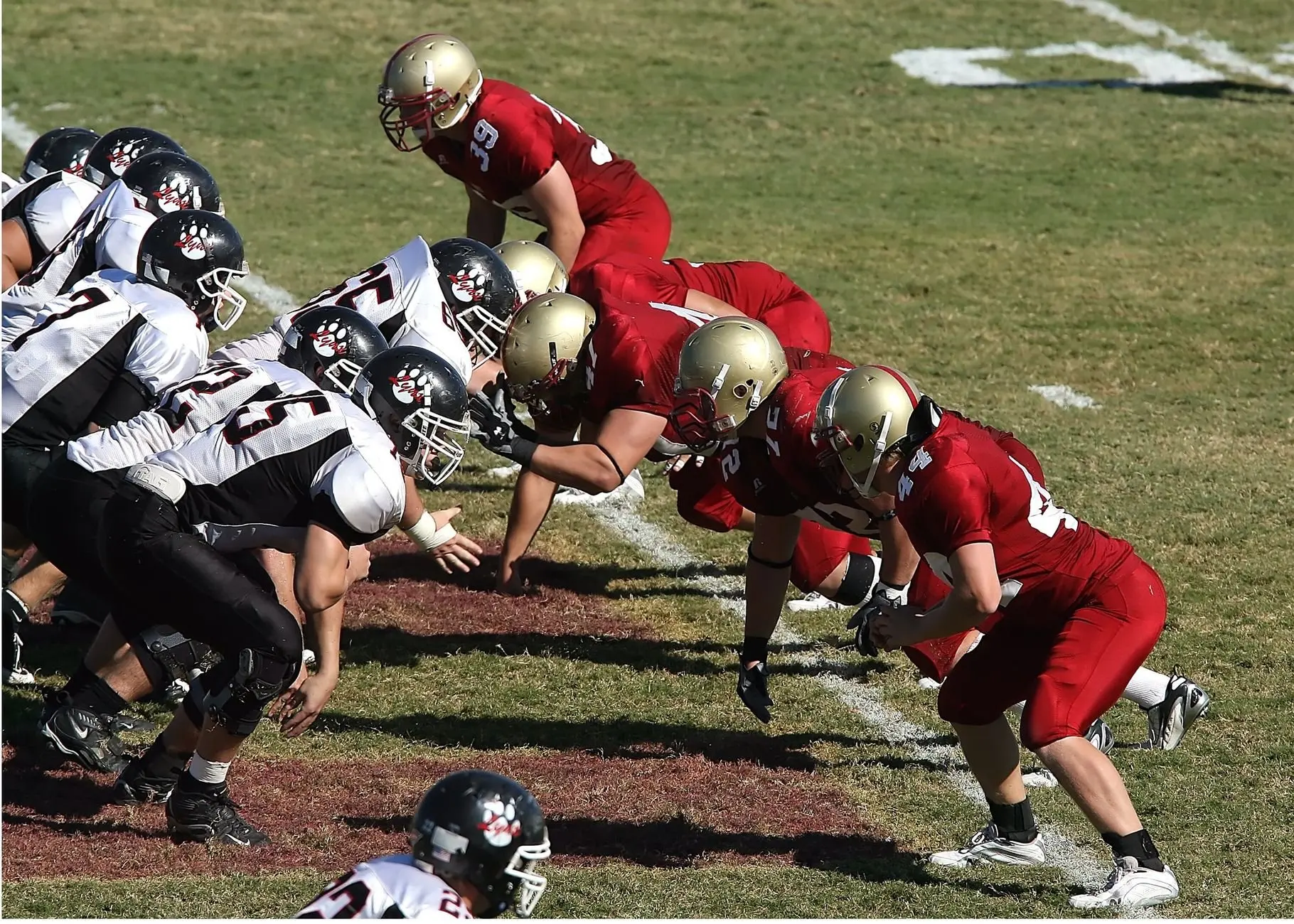
The NFL roster size limit in the regular season is 53 players on the Active/Inactive List, but only 47 can be active on game day, or 48 when a team has at least eight qualifying offensive linemen.
Practice squad players sit outside that 53-player list and need an elevation before they can play. The football hub collects related league explainers, starting with how do nfl playoff seeds work. The sections below follow one player from the offseason roster to a game-day jersey.
From offseason roster to the 53-player list
An NFL roster is not one fixed number. It shrinks through the summer, and each stage decides who lands on the list that counts during the season. A typical route runs from training camp to roster cuts, then waivers, then the practice squad, according to SportsOrbitX’s practice squad explainer.

- Offseason roster. Teams carry a larger group in the offseason than they are allowed to carry once games count. That extra room lets coaches look at more players than will ever dress.
- Training camp. Players compete for the places that remain. Camp performance matters because the regular-season list is far smaller than the group that reports.
- Roster cuts. Teams trim down to the regular-season Active/Inactive List of 53 players. Every player cut at this point is either finished with the team or heading into the next stage.
- Waivers. Released players pass through waivers. For many of them, that step comes before a practice squad spot.
- Practice squad. Players who stay with the organization this way practice with the team but are not part of the normal 53-player roster.
For a player on the bubble, the cutdown is therefore not always the end of the road. A release can lead to the practice squad, where a player stays close to the team and can be called up later in the year.

Game day: active and inactive players
The 53-player Active/Inactive List is a pool, not the group that dresses. A team can have 47 players active on game day, or 48 when it has at least eight offensive linemen, per SportsOrbitX. That answers how many players dress for an NFL game: 47 in the standard case, and 48 with the offensive line condition met.
What the inactive list means
Players on the 53-player list who are not among that game-day group are inactive for that game. They remain on the roster and keep practicing with the team, but they do not suit up.
The offensive line condition
The extra 48th spot is tied to the offensive line. A team with at least eight offensive linemen can use it. A team with fewer stays at 47. This makes roster construction a numbers puzzle: carrying that eighth lineman buys one more active spot, and the coaching staff decides which position benefits from it.
Practice squad size and eligibility
The practice squad is a separate group from the regular 53-player list. For 2026 it can hold 16 players, or 17 if one of them qualifies as an International Player, according to SportsOrbitX. Practice squad players are available for practice and development, but they must be elevated before they can play in a regular-season game.
Who is eligible
Eligibility depends on how much NFL experience a player has accrued. The categories described by the same source are:
- No accrued seasons. Players with zero accrued NFL seasons are eligible.
- Limited experience. A player with fewer than nine regular-season games in his lone accrued season is also eligible.
- Veteran spots. A team may carry up to 10 players with no more than two accrued seasons, and up to six with unlimited accrued seasons. Players in those two categories cannot exceed 10 combined.
The practical effect is that the squad leans toward young and inexperienced players, with a capped number of veteran places. A team deciding who to keep has to balance development prospects against a limited number of experienced slots.
How an elevation works
An elevation is the only route from the practice squad to a regular-season game, and it is temporary by design. The sequence below follows the process as described by SportsOrbitX.
- Start on the practice squad. The player practices and develops, but cannot play in a regular-season game from that status.
- File the addendum. The team uses the applicable Standard Elevation Addendum to move him to the active/inactive list for the game.
- Play or sit. Once on the list, he is subject to the same game-day limit as everyone else, so he still needs one of the active spots to dress.
- Revert. He normally reverts to the team’s practice squad on the first business day after the game.
Under standard elevation rules, a player can be elevated for a maximum of three regular-season games in the same League Year. That ceiling shapes how a team uses the tool. It works as a short-term fix for an injury or a thin position, and it is not a way to keep a full-time starter off the 53-player list. Past that limit, a team that wants the player in uniform has to deal with the main roster instead.
Roster tiers at a glance
| Tier | Size or limit | What it means | Planning use |
|---|---|---|---|
| Active/Inactive List | 53 players in the regular season | The main roster; all of it is available to the team during the season | The number a cutdown must reach |
| Game-day active players | 47, or 48 with at least eight qualifying offensive linemen | The players who dress for a game | Decides who is inactive that week |
| Practice squad | 16 players in 2026; 17 if one is an International Player | Separate from the 53-player list; cannot play without an elevation | Holds depth and development players |
| Elevations | Maximum of three regular-season games per League Year under standard rules | Temporary move to the active/inactive list for a game | Covers short-term gaps |
These figures come from SportsOrbitX’s practice squad rules summary.
What the limits mean for roster management
The numbers create a chain of trade-offs. The 53-player list is a hard ceiling in the regular season, so adding a player usually means a team has to clear a place. The game-day limit is tighter than the roster, so some players on the 53 are inactive each week. And the practice squad gives teams a place to keep depth without using one of the 53 spots.

- Fans tracking a team. Treat a practice squad signing as a depth move, not a roster addition. The player cannot play until the team elevates him.
- Players on the bubble. A cut at the end of camp can lead to waivers and then a practice squad place. Eligibility rules, especially accrued seasons, decide whether that route is open.
- Weekly lineup watchers. An inactive player has not been dropped. He is on the 53-player list and simply does not dress.
Those choices also connect to how players are paid and signed. The contract side of these moves is covered in how do nfl contracts work. Readers who want the draft side of roster building can read the explainer on how do compensatory picks work nfl.

Frequently asked questions
Can a practice squad player sign with another team?
Yes. A practice squad player remains available to sign with another team’s active roster during the League Year. The rules restrict a player from simply jumping from one team’s practice squad to another team’s practice squad. He also generally cannot sign with his team’s upcoming opponent after 4 p.m. ET on the sixth day before the game, which becomes 10 days during a bye week, per SportsOrbitX.
What does an elevated player earn?
He receives the applicable minimum salary for a player with his number of credited seasons, prorated for the relevant period, as described by SportsOrbitX.
How do International Player Pathway players fit in?
The league announced on Aug 12, 2021 that teams may sign or elevate such players to the active roster, according to Yahoo Sports. The arrangement requires them to remain on the practice squad for at least three games first.
Is the practice squad part of the 53-player roster?
No. Practice squad players practice with the team but are not part of the normal 53-player roster, and they must be elevated before they can play.