| Topic | What to know | Planning use |
|---|---|---|
| Playoff field | 14 teams, 7 per conference | Use it to judge how tight a late-season race really is for a given conference. |
| Seeds 1 to 4 | The four division winners in each conference | Winning the division guarantees a top-four seed, so it matters more than raw record alone. |
| Seeds 5 to 7 | The three best remaining records in each conference | Wild-card teams play on the road in the first round. |
| First-round bye | Only the No. 1 seed in each conference | The bye is the one prize worth chasing for the full season. Seeds 2 to 7 all play on Wild Card weekend. |
| Draft position | 18 non-playoff teams pick first in reverse order of record. Wild Card losers pick 19th to 24th and Divisional losers 25th to 28th. | Reading a playoff exit as a draft slot shows what each result means for a team’s offseason. |
| Key dates (2026 season) | Divisional round Jan. 23 and 24, 2027. Conference championships Sunday, Jan. 31, 2027. Super Bowl LXI Sunday, Feb. 14, 2027, at SoFi Stadium in Los Angeles. | These are the fixed points for planning viewing around the postseason. |
| Pro Bowl Games pay (2022 agreement) | $84,000 per winning player and $42,000 per losing player | This shows why selection and attendance are treated as a real obligation. |
Playoff structure, draft-slot and date figures come from a published guide to the NFL playoffs, and the Pro Bowl Games pay comes from the NFL’s announcement of the 2022 agreement.
How do NFL playoff seeds work? Each conference seeds its four division winners 1 to 4, ranks the three best remaining records 5 to 7, and gives only the No. 1 seed a first-round bye.
This page is the starting point for football explainers on the playoffs, the draft, rosters, contracts and game rules. For the full bracket walk-through, read how do the NFL playoffs work, then use the sections below to find the explainer that matches the headline in front of you.
Choosing where to start
Most football headlines raise one of a handful of rules questions. The quickest route is to match the headline to the topic, then read that section before moving on. Reading in the order of the season also works, because the regular season decides the playoff bracket and the bracket decides much of the draft order.
- Following a playoff race: start with the seeding section below. Seeding explains why a division lead matters and why one seed is worth far more than the rest. Tiebreaker disputes belong to the standings explainer, how do NFL standings work.
- Tracking the draft: go to the draft-order section. It shows how a regular-season record and a playoff exit both turn into a pick position.
- Planning around dates: the playoff rounds section lists the postseason dates for the 2026 season. For the way the regular-season calendar is built, see how is the NFL schedule made.
- New to the sport: begin with NFL rules for beginners, then return here for the postseason and draft detail.
- Following roster and contract news: jump to the roster, contract and cap section, which points to the dedicated guides.
A reader who only wants the answer to the seeding question can stop after the next two sections. Readers who follow the draft should keep going, because the same playoff results set the order of picks.
How the league and playoff field are built
Conferences and divisions
The NFL divides its 32 franchises evenly into two conferences, and each conference is split into four divisions, according to a breakdown of the playoff bracket. That structure explains the seeding rules. Division winners are rewarded first, and the remaining places go to the best records among everyone else in the same conference.
Because every playoff slot is allocated within a conference, a team never competes with the other conference for a seed. A team can have a strong record and still sit outside the top four seeds if another club wins its division. The sections below cover what that means in practice.
The size of the field
Fourteen teams make the postseason, seven from each conference, as the playoff guide sets out. Four of the seven in each conference get in by winning a division. The other three get in on record alone. This split is the most useful thing to hold in your head when reading late-season standings. A club chasing a division title is chasing a guaranteed top-four seed. A club outside the division race is chasing one of the three remaining places, which are lower seeds.
The practical judgement for fans is simple. The division race and the wild-card race are separate contests with different stakes, and a headline that says a team is in the playoff picture does not say which one it is in.
How NFL playoff seeding works
Seeds 1 to 4: the division winners
In each conference the four division winners are seeded 1 to 4. The order within that group follows regular-season record. A division title therefore locks in a seed in the top four, and a wild-card team can never rank above a division winner, whatever the records say.
This matters most in a close year. A division winner with a modest record still hosts a first-round game, while a wild-card team with a better record travels. Anyone comparing two clubs by win totals alone needs to check the division standings before assuming who will be at home.
Seeds 5 to 7: the wild cards
The three teams with the best remaining records in each conference are seeded 5 to 7. These are the non-division-winners, ranked by record. Wild-card clubs begin on the road, and none can earn a first-round bye. Their route to a title is the longest available.
Why the No. 1 seed is special
Only the No. 1 seed in each conference gets a first-round bye, while seeds 2 to 7 play on Wild Card weekend. The reward is concrete. The top seed needs three wins to take the title, and every other playoff team needs four. That is a full game fewer to play, which is why the final weeks of a season can turn on a single result even for teams that are already certain to qualify.
The advice for readers is to treat the difference between the first seed and the second as larger than the difference between any other adjacent pair. Seeds 2 to 7 all begin in the same round. Seed 1 skips it.
When teams finish level
When teams finish level, a fixed list of tiebreakers decides who goes through, starting with head-to-head results. The full ladder is long, and it depends on how many clubs are tied and whether they share a division. That is the territory of the standings explainer, how do NFL standings work, which is the better place to check a specific tie scenario than any summary here.
The playoff rounds from Wild Card weekend to the Super Bowl
Wild Card weekend pairings
The first-round pairings are fixed. In each conference the No. 2 seed hosts No. 7, No. 3 hosts No. 6, and No. 4 hosts No. 5, according to the playoff guide. The No. 1 seed waits. Because the pairings are set by seed and not by geography or rivalry, fans can sketch the first round as soon as the seeds are known.
The Divisional round reseeds
After Wild Card weekend the bracket is not locked in the way many fans expect. The No. 1 seed hosts the lowest-seeded Wild Card survivor. That reseeding rewards the top seed twice, first with the bye and then with the weakest remaining opponent by seed. It also means that an upset in the first round can change the Divisional pairings, so a printed bracket made before Wild Card weekend is only a guide.
Dates for the 2026 season
| Round | Matchup rule | Date (2026 season) |
|---|---|---|
| Wild Card weekend | 2 hosts 7, 3 hosts 6, 4 hosts 5; No. 1 seed has a bye | Opens the postseason |
| Divisional round | No. 1 seed hosts the lowest-seeded Wild Card survivor | Jan. 23 and 24, 2027 |
| Conference championships | Conference title games | Sunday, Jan. 31, 2027 |
| Super Bowl LXI | Season finale | Sunday, Feb. 14, 2027, SoFi Stadium, Los Angeles |
The dates and matchup rules in this table come from the same playoff guide.
The whole bracket has thirteen games, according to the bracket breakdown. Planning a viewing calendar around the two Divisional dates and the two later fixed dates covers the most-watched part of the postseason, because the Wild Card schedule is set by the seeding that comes out of the regular season.
How NFL draft order is decided
Non-playoff teams pick first
The draft is the clearest example of how the regular season and the playoffs feed into the next year. The 18 non-playoff teams pick first, in reverse order of their records. In plain terms, the worse the record, the earlier the pick, as the playoff guide explains. That answers the common question of how the NFL Draft order gets decided for most of the first round.
Playoff teams slot in by how far they go
Playoff teams do not pick by record alone. Wild Card losers pick 19th to 24th, and Divisional losers pick 25th to 28th. Clubs that go deeper in the postseason pick later still. A first-round exit therefore buys an earlier pick than a Divisional round exit, even if the teams finished the regular season with similar records.
- Reading a bad finish: a team that misses the playoffs has the strongest claim to an early selection. Its pick position tracks its record.
- Reading a short playoff run: a Wild Card loss lands in the 19th-to-24th band, so the playoff result sets the pick slot more than the regular-season record.
- Reading a deep run: the further a team advances, the later it picks, which is the cost of success from a draft standpoint.
Where to go next
This summary covers the broad structure. For the full ladder and how ties between teams are handled in the draft, read how is nfl draft order determined. The same pick ladder applies to the main selections only. Extra picks that teams can receive outside the standard order are covered in how do compensatory picks work nfl. For the event itself, from the opening selection to the final round, read how does the NFL draft work.
Rules, penalties, overtime and kickoffs
Rule questions tend to arrive in the middle of a game, when a flag lands or a result is decided in extra time. Three explainers cover the most common sources of confusion, and the right one depends on what just happened on the field.
- A flag on the field: NFL penalties explained covers what the referee’s signal means and what follows from it.
- A tied game: NFL overtime rules sets out how a game level at the end of regulation is settled.
- A kickoff or return: nfl kickoff rules covers special-teams procedure, which is a frequent source of rule changes.
The practical tip is to read the penalty and special-teams explainers before a season starts and the overtime explainer before the playoffs, because overtime matters most when a single result ends a season. Rules for the postseason and the regular season can differ in the details, so check the current-year rulebook language when a close call decides a game.
Rosters, contracts and the salary cap
Roster and money stories overlap, which is why they are easy to confuse. A roster story is about who is allowed on the team and in what category. A contract story is about what a player is owed. A cap story is about how a club fits all of those commitments together.
Roster limits
Roster-cut headlines are about the limit on how many players a club may carry. The reference for the limit and for the practice squad is nfl roster size limit. Check it whenever a story describes a signing as a roster move and not a contract event.
Contract types and guarantees
Contract headlines usually lead with a large total. The more informative question is how much of that figure is guaranteed. The explainer how do nfl contracts work covers the contract types and what a guarantee means. Until you know that, treat the headline total with caution.
The salary cap and free agency
Cap and free-agency stories explain why a team can or cannot afford a player. How does the NFL salary cap work covers the limit that shapes those decisions. Read it alongside the contract guide, because a contract is only meaningful against a club’s cap room.
Positions, formations and the sideline
Game coverage often assumes the reader knows what each position does. A defender is described as a particular role, a formation is named, and the analysis only makes sense if those terms are familiar. Football positions explained is the right starting point for that vocabulary, and it pairs well with any recap that discusses matchups.
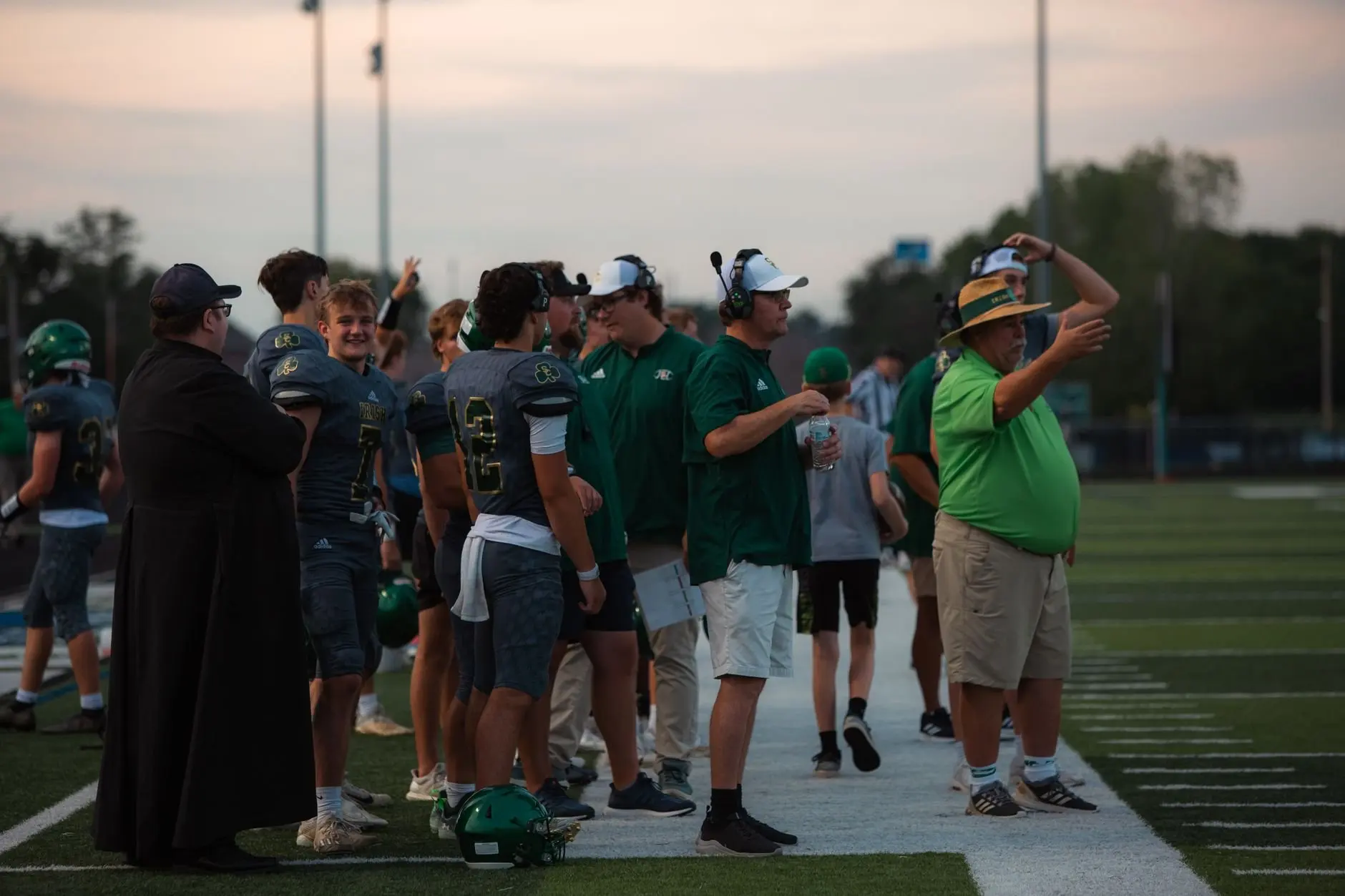
Coaches communicate with the field through headsets, and a lot of strategy coverage is about decisions made there. Knowing positions and formations makes that coverage easier to follow, because a play call is a statement about who is on the field and where they line up. If a recap loses you, go back to the positions guide before the rules guides.

Pro Bowl and All-Pro recognition
Individual honours are a separate track from the team standings. Selection to the Pro Bowl Games is an honour with real money attached. Under the 2022 agreement, according to the NFL’s announcement, players on the winning team receive $84,000, and members of the losing side receive $42,000.
That pay structure is a useful way to read the event. A selection is more than a line in a player’s biography, and the league treats participation as an obligation. For the selection process itself, including how the honours differ from one another, read how are pro bowl players selected.
Reading headlines and game-day coverage
A few habits make football news easier to place. When a headline says a team has clinched, ask which kind of spot it has clinched: a division title, which brings a top-four seed, or one of the three wild-card places, which are lower seeds. When a headline says a team is eliminated, check whether it means the playoffs or only the division race. When a story talks about draft position, check whether the team made the playoffs, because that decides which pick-order rule applies.

Recaps and scoreboards tell you the outcome of one game. The explainers on this page tell you what that outcome changes. A single result can move a seed, change a bye, or shift a pick from one band to another, and the same result can matter to three different readers for three different reasons.
Frequently asked questions
Has the NFL playoff field always had 14 teams?
No. The field grew to 14 teams for the 2020 season. It had been 12 teams since 1990, according to the playoff guide.
How does a tied game count in the standings?
A tie counts as one-half win and one-half loss for both clubs, which matters when records are compared for seeding.
How many games are in the playoff bracket?
The modern bracket consists of thirteen total games, according to the bracket breakdown.
Do players selected for the Pro Bowl Games have to attend?
Yes, barring a medical issue. The NFL’s 2022 announcement said selected players would be required to attend.