
| Situation | Current rule | Planning use |
|---|---|---|
| Kick lands short of the landing zone (before the 20-yard line) | Ball is placed at the receiving team’s 35-yard line | A short kick gives the receivers the same starting spot as a touchback, so kickers need depth. |
| Touchback after a standard kickoff | Ball comes out to the 35-yard line, up from the 30 in 2024 | Receivers weigh a kneel in the end zone against a return that has to beat that spot. |
| Kickoff from the 50-yard line | The 2026 rulebook (Rule 6-1-5) modifies the dead ball spot after a touchback | Treat the standard 35 as the default only for kicks from the usual spot. |
| Receiving team’s setup zone | The 2026 rulebook (Rule 6-1-3) modifies receiver alignment requirements | Return schemes must start from a legal alignment or risk a formation penalty. |
| Onside kick | Kicking team may declare one at any time during the game (Rule 6-1-6) | Timing is a strategy choice, not a late-game restriction. |
The figures come from the NFL’s 2026 rulebook and ESPN’s kickoff rules explainer.
NFL kickoff rules send a touchback to the 35-yard line, and a kick that lands short of the landing zone also gives the receiving team the 35. The 2026 rulebook adjusts receiver alignment and the touchback spot on kicks from the 50-yard line.
Special teams swing field position in ways that show up late in a season, so the rules below are worth knowing alongside how do nfl playoff seeds work and the other explainers in the football hub.
Touchbacks and the decision to return
A touchback now puts the ball at the 35-yard line. The kickoff landing zone runs from the goal line to the 20-yard line, and a kick that lands before the 20 is also placed at the receiving team’s 35, according to the same ESPN account.
The practical result is that a kneel in the end zone is a worse deal for the kicking team than it once was, and returners have a better reason to bring the ball out. ESPN puts the kickoff return rate at 32.8% in 2024, up from 21.8% in 2023, and notes that teams returned 78.3% of kickoffs during the first four weeks of 2025. A return only helps when it gains on the 35-yard baseline, so the decision comes down to how much space the returner sees.
- Catch in the end zone and take the touchback. This suits a returner with a crowded lane, because the ball starts at the 35-yard line without any risk.
- Return the kick. This suits a unit that has blocked well in practice and a returner who can reach the 35 with room to keep going. A stop short of that spot is a loss against the touchback.
- Let a short kick land. A kick that falls before the 20-yard line is placed at the receiving team’s 35, so there is nothing to gain by scrambling after it.
Onside kicks
The kicking team may declare an onside kick at any time during the game under Rule 6-1-6 of the 2026 rulebook. That matters because the competition committee had suggested eliminating the requirement that onside kicks could happen only in the fourth quarter, as On3’s report on the owners’ meetings describes.
For a coach, the useful shift is that the decision is about game state rather than the calendar. A team that is behind by more than it can comfortably chase can choose its moment, and the defense cannot assume the attempt will wait for the fourth quarter. The declaration is the key requirement: the kicking team says in advance that it will try an onside kick, which is why it sits in the same rule as the other free-kick provisions.
An onside attempt still has to follow the free-kick rules around kicking and formation. A kicking team that lines up illegally or kicks illegally takes a penalty, which is covered below.
What changed and when
The kickoff format has been modified in steps rather than all at once. The latest changes appear in the 2026 rulebook, while the earlier ones set up the current landing zone and touchback spot.
- 2024 overhaul. The legal landing zone between the goal line and the 20-yard line took shape, and the touchback stayed at the 30-yard line for that season.
- 2026 rulebook. It modifies alignment requirements for receiving team players in the setup zone (Rule 6-1-3), modifies the dead ball spot after a touchback when the kickoff is from the 50-yard line (Rule 6-1-5), and permits an onside kick to be declared at any time (Rule 6-1-6).
Anyone who tracks these changes should read the 2026 items as the most recent. Earlier commentary that still describes the 30-yard touchback or a fourth-quarter-only onside kick reflects the rules before those updates, according to the NFL’s rulebook and the ESPN summary.
Kickoff alignment and the setup zone
The kickoff is a free kick, and the rules start with where each unit may stand before the ball is kicked. The receiving team’s players must line up inside a defined setup zone, and the 2026 rulebook modifies those alignment requirements under Rule 6-1-3. The kicking team’s formation is covered by the same rule family, which is why a formation error on a kickoff is judged as an illegal formation on a free kick.
The alignment rules shape what a return can look like. A receiving unit that is set in a legal alignment can run its blocking scheme from the setup zone, while an illegal alignment hands the kicking team a penalty before the play even develops. Special teams coaches therefore drill alignment as carefully as blocking assignments.
The landing zone adds a second layer. A kicker aiming for depth wants the ball to land between the goal line and the 20-yard line, because a kick that lands before the 20 gives the receivers the 35 without a return at all.
Penalties on kicks and kickers
Kick penalties fall into a few named categories in the 2026 rulebook. Illegal kick is listed under Rules 6-1-1 and 6-1-6, and illegal formation on a free kick under Rules 6-1-3 and 6-1-6. Running into the kicker is a separate foul under Rule 12-2-12.
The distinction matters for decisions. A formation error is usually a coaching or communication problem, so it is fixable on the sideline. Running into the kicker is a split-second fouls-by-contact decision for a rusher, and it can extend a drive for the team that was about to punt or attempt a kick.
Field goals and the line of scrimmage
A field goal attempt is a scrimmage kick, so it starts from the line of scrimmage rather than from a tee. The rulebook’s Section 17 covers kicks and Section 18 covers the line of scrimmage and the neutral zone, which is why the length of an attempt depends on where the previous play ended. A drive that stalls at the opponent’s 20-yard line gives the kicker a shorter attempt than one that stalls near midfield, and there is no single fixed figure that applies to every kick.
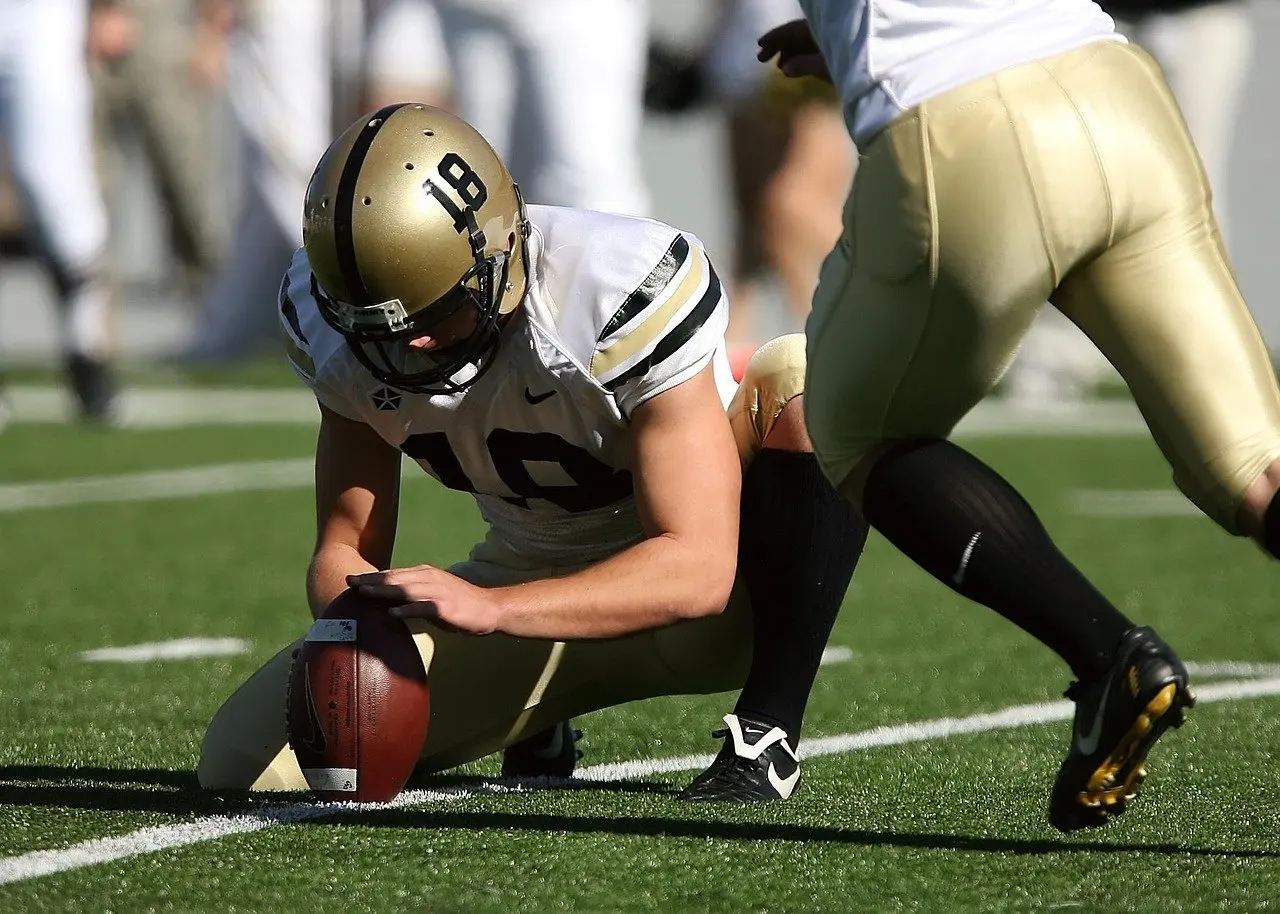
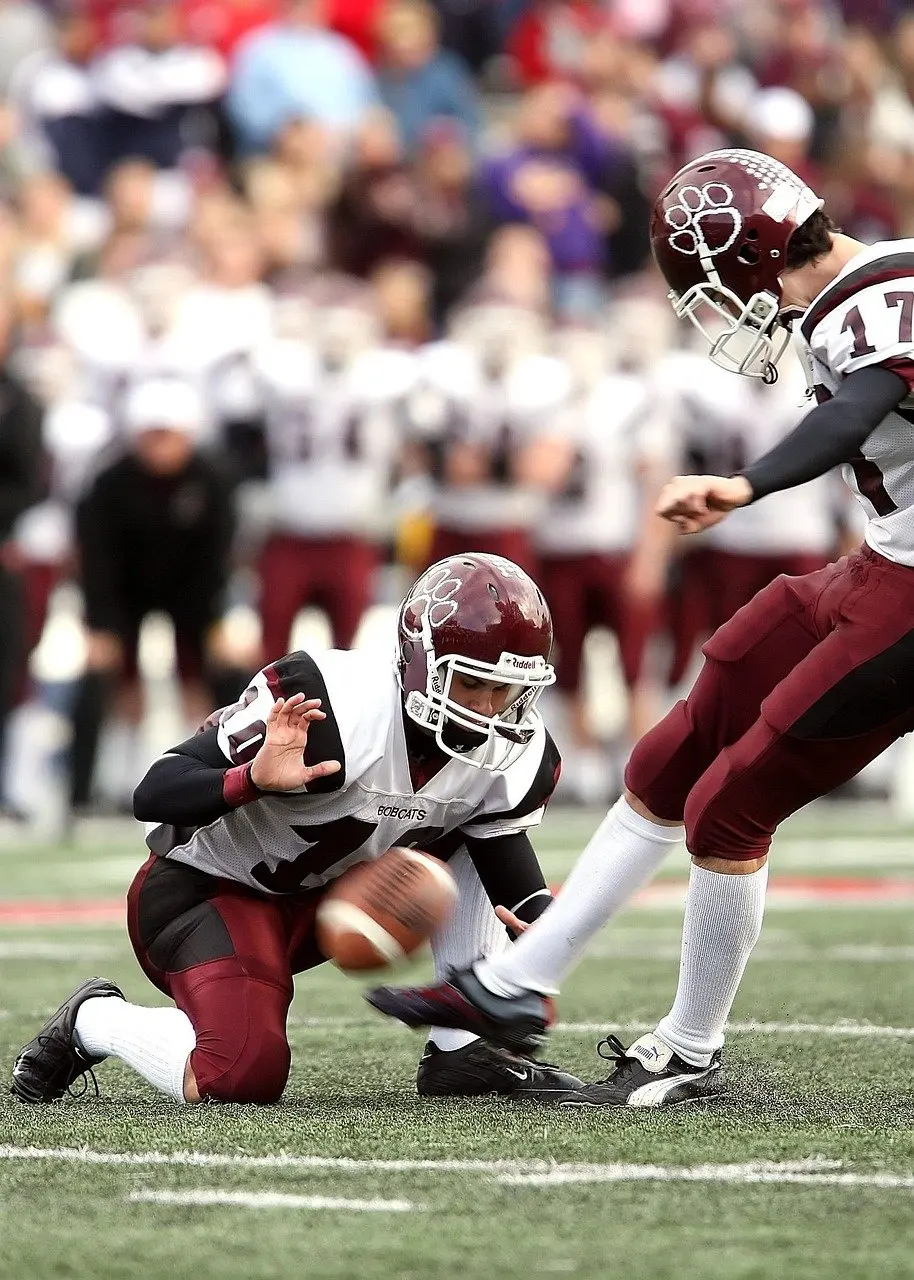
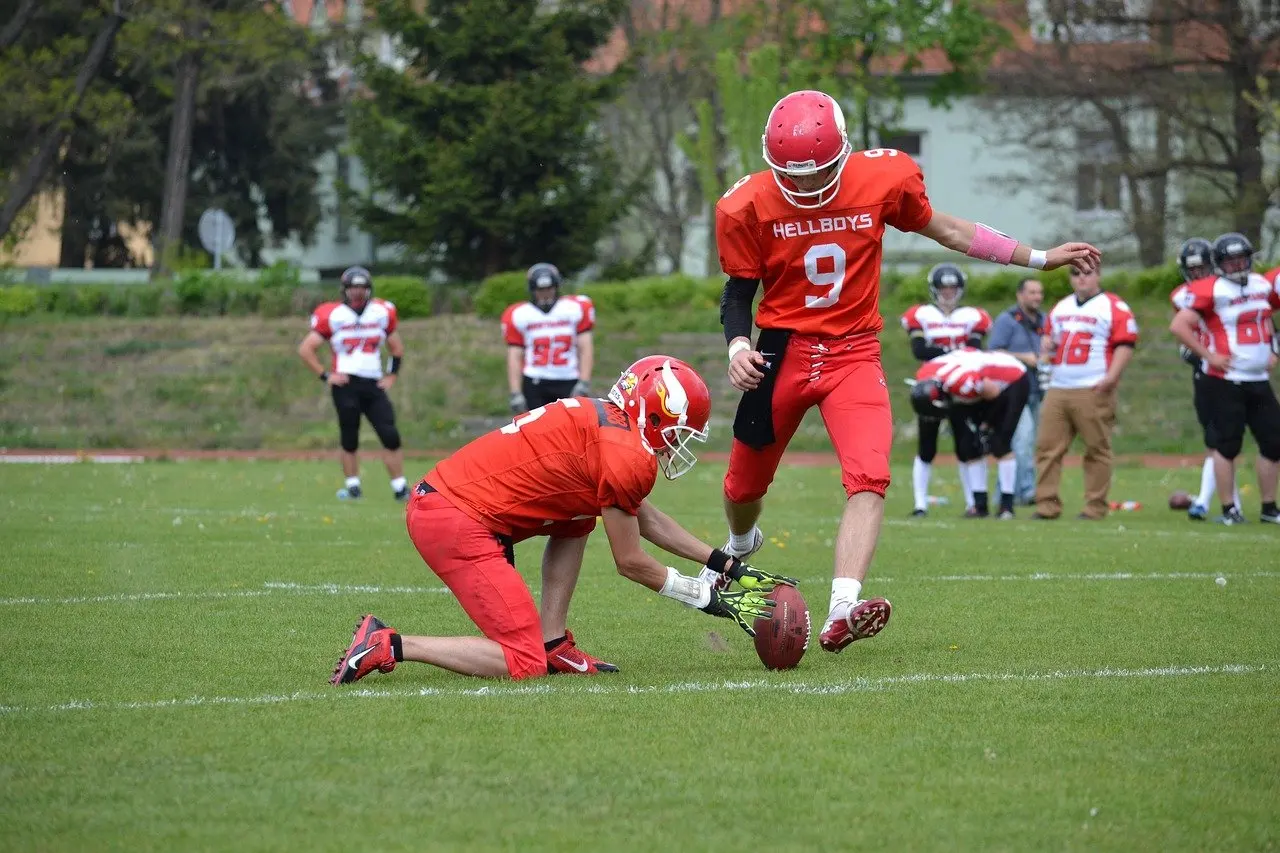
The field goal unit has three working parts: the snapper, the holder and the kicker. The holder sets the ball on the turf, and the kicker approaches from behind. That is the formation to picture when a coach has to decide between kicking and going for it on fourth down.
Kicking is also a roster question. A specialist’s role and pay are a contract matter, covered in how do nfl contracts work, and the kicker and returner jobs fit into a larger picture in football positions explained.
Frequently asked questions
Which players can move while the kickoff is in the air?
Under the 2024 overhaul, only the kicker and the returners move while the ball is in the air, according to On3’s account of the owners’ approval of the changes.
Where in the rulebook do kicks and the line of scrimmage appear?
The 2026 rulebook lists kicks under Section 17 and the line of scrimmage and neutral zone under Section 18.
When did owners approve the 35-yard touchback?
Owners approved the change in April 2025, and it applied to that season, moving touchbacks to the 35 from the 30.